
Update: Seekom have acknowledged a cyber incident
“We identified the unauthorised access on 20 November 2026. We acted quickly to contain it and engaged independent cybersecurity specialists to investigate. Our investigation is ongoing,” the spokesperson said.
“We are aware of reports of guests receiving suspicious WhatsApp messages that refer to booking details, and we are looking into them as a priority. We have given our accommodation customers guidance to share with their guests. Guests should not click links or make payments in response to unexpected messages, and should contact their accommodation provider using known contact details.
“We are sorry for the concern this is causing. We will provide further updates as our investigation progresses.”
A growing wave of cyber-related travel scams is affecting New Zealand accommodation providers, with holiday parks and campground operators warning customers about fraudulent communications containing genuine booking information.
The latest reports, covered by the New Zealand Herald, highlight how cybercriminals are exploiting information associated with legitimate travel reservations to make phishing messages considerably more convincing.
Unlike traditional phishing campaigns that rely on generic messages, these scams reference real customer information, including names, booking dates, the number of guests and contact details. This allows scammers to impersonate accommodation providers and send messages that appear to be legitimate booking notifications.
Customers are being warned about messages claiming there is a problem with their reservation, asking them to verify payment details or take action to prevent their booking from being cancelled.
A Wider Problem Across Booking Platforms
The incidents raise questions about the security of the third-party booking and property management platforms used throughout New Zealand’s accommodation industry.
One of the previously reported incidents involved RMS Cloud, which provides property management and booking software to accommodation providers in New Zealand and Australia.
RMS customers reported fraudulent communications referencing genuine reservation information. RMS acknowledged the suspicious communications and said its investigation involved cybersecurity and digital forensics specialists.
More recently, New Zealand booking platform Bookit.co.nz also disclosed unauthorised activity within its platform. Its 20 November 2026 update confirmed that some personal and booking information belonging to customers of certain partners may have been accessed.
Bookit identified potentially affected information including names, addresses, email addresses, telephone numbers and booking information. The company said it had not identified evidence that credit card details had been accessed.
Importantly, Bookit has stated that its incident is not related to the RMS incident.
Seekom, TOP 10 and Other Booking Integrations
There are also questions about the wider ecosystem of booking and property management systems used by New Zealand holiday parks.
The Old Ghost Road website’s booking system appears different from the TOP 10 Holiday Parks booking system. However, Old Ghost Road appears to use Seekom’s ibex property management platform (ibexres.com) behind the scenes for its reservation functionality.
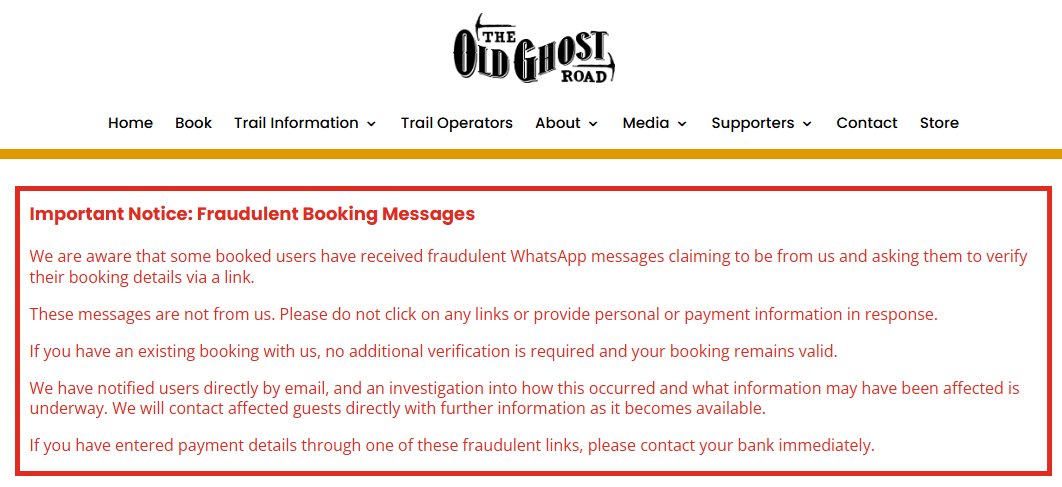

Seekom’s website identifies TOP 10 Holiday Parks as one of its customers and states that it is one of only three approved systems for the TOP 10 Holiday Park group. Seekom also describes its partnerships and integrations with a range of other accommodation providers and technology platforms.
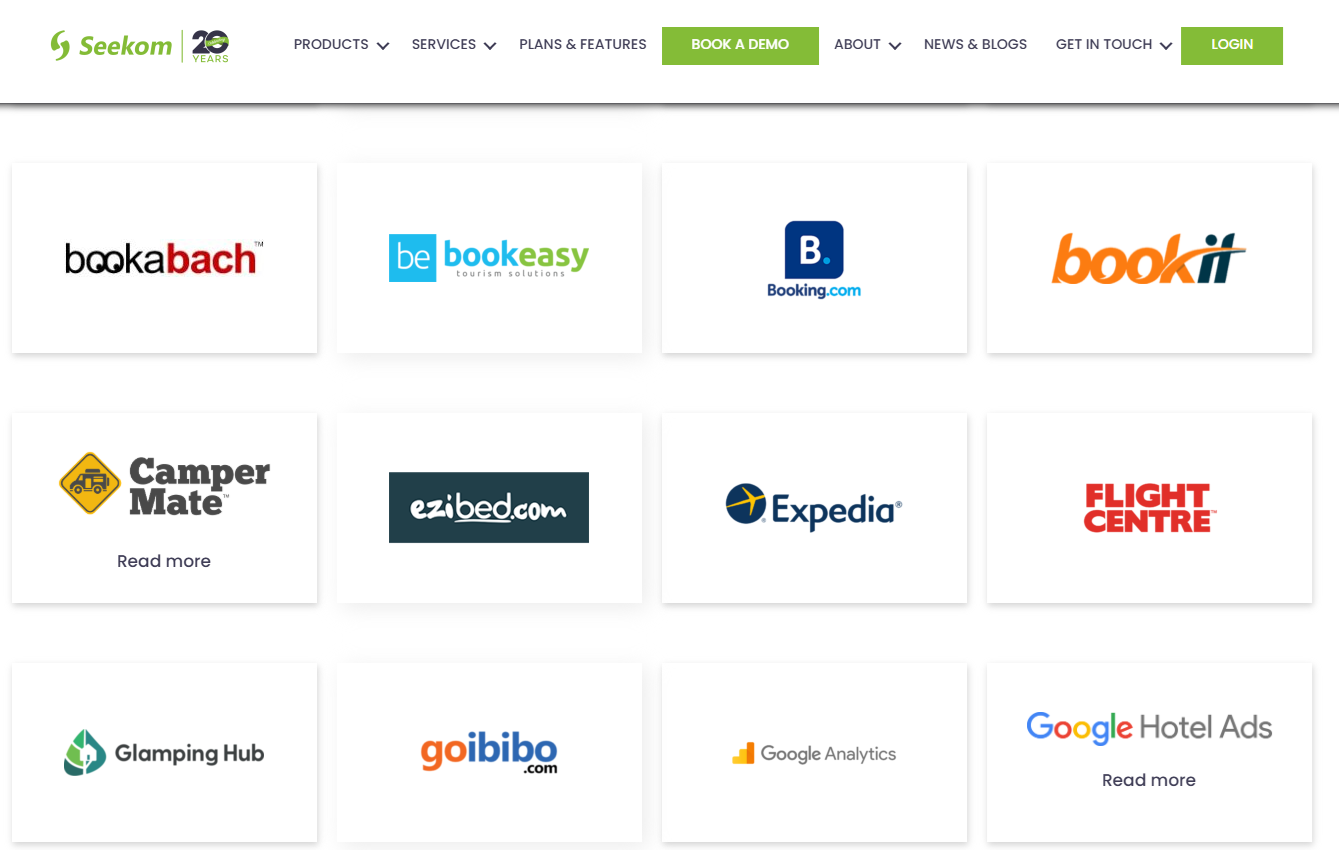
This is worth highlighting because the booking interface presented to customers does not necessarily reveal the underlying property management software or the systems processing their reservation information.
However, the use of Seekom, ibex or any other shared booking technology should not automatically be interpreted as evidence of a compromise. There is currently no basis to suggest that every accommodation provider using these platforms has been affected nor evidence to provide any linkage between them.
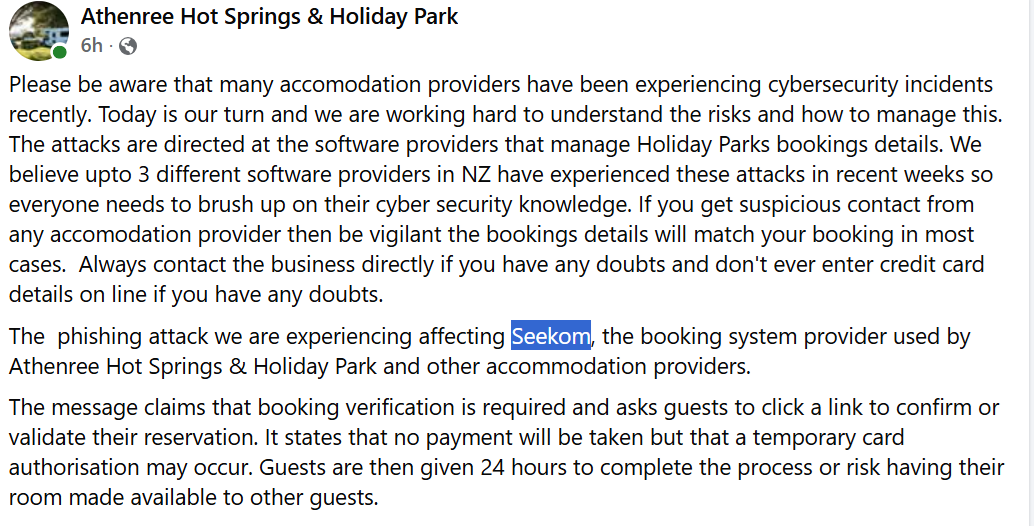
Facebook posts now online mention Seekom so more noise is generating pointing towards the platform
The wider industry also relies on numerous other booking and integration providers, many of which have not reported security incidents or published warnings on their websites.