An investigation into the recent registration of previously used New Zealand domains, online gambling redirects and the person appearing as the registrant
A pattern involving a number of previously used New Zealand domain names has raised questions about how old .nz domains are being repurposed and whether New Zealand’s domain registration ecosystem is doing enough to identify potentially problematic registrations.
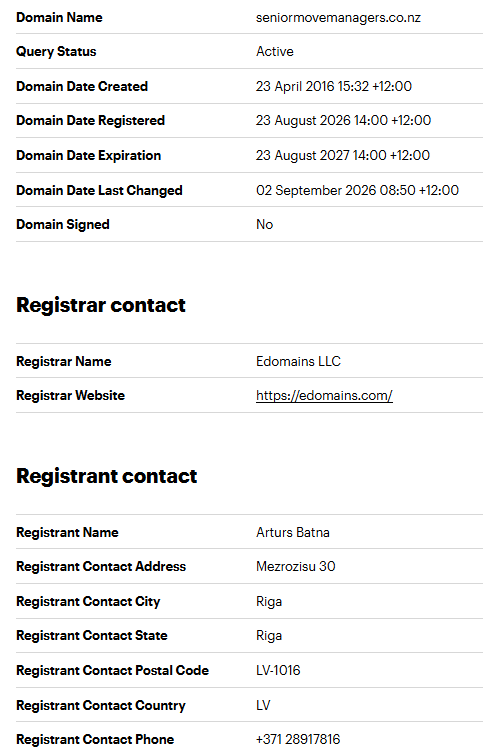
Over the past month, a number of older New Zealand domains appear to have been registered by Arturs Batna, a Latvian national residing in England.
What makes the registrations particularly interesting is what happens after the domains are acquired.
They all appear to have subsequently been turned into, or redirected towards, online gambling and casino websites.
There is nothing inherently illegal about registering an expired domain and using it for a different legitimate purpose. However, the combination of the identity appearing across multiple registrations, the previous subject matter of some of the domains, and their subsequent use in connection with online gambling raises questions that deserve further investigation.
It is unlikely people visiting these sites are expecting to end up on an online gambling website.
Who is Arturs Batna?
UK Companies House records identify Arturs Batna, born May 1995, as a Latvian national whose country of residence is England. He became a director of Topleed Limited on 1 September 2023 and was subsequently recorded as the company’s person with significant control.
Topleed Limited was incorporated in 2015 and has previously had several directors, including:
- Muhammad Ikram Ul Haq – British
- Muhammad Ismail – Italian
- Szabina Petrovics – Hungarian
- Arturs Batna – Latvian
The previous directors have since resigned, leaving Batna as the active director recorded by Companies House.
Companies House currently describes Topleed Limited as a company facing a proposal for compulsory strike-off, while its latest filed accounts describe it as dormant. Its registered SIC classification is 47990 – Other retail sale not in stores, stalls or markets.
There is therefore no obvious indication from the UK company’s current registered business classification that it is an online gambling company.
That makes the apparent connection between Batna and the recently acquired .nz domains more interesting.
The New Zealand domain registrations
An examination of New Zealand Domain Name Commission records shows a number of recently acquired .nz domains where Arturs Batna appears as the domain contact.
The registrations observed during this investigation have used registrars including eDomains LLC and Dynadot.
Of particular interest is the consistency of the registration information.
The contact information observed across the domains includes:
Arturs Batna
artursbatna54@gmail.com
The domains are not all obviously connected by their original purpose.
Some had previously been associated with websites or organisations aimed at older New Zealanders and senior citizens.
After acquisition, however, some of these domains appear to have been repurposed or redirected towards online gambling services.
How they are selecting these old domains to acquire and redirect is not completely obvious.
At this stage there is no evidence demonstrating that senior citizens were specifically targeted by the new gambling operations. It is simply an observation that some of the previously registered domains had associations with that demographic and without a method to search dnc.org.nz by registrant name we cannot ascertain a pattern easily.
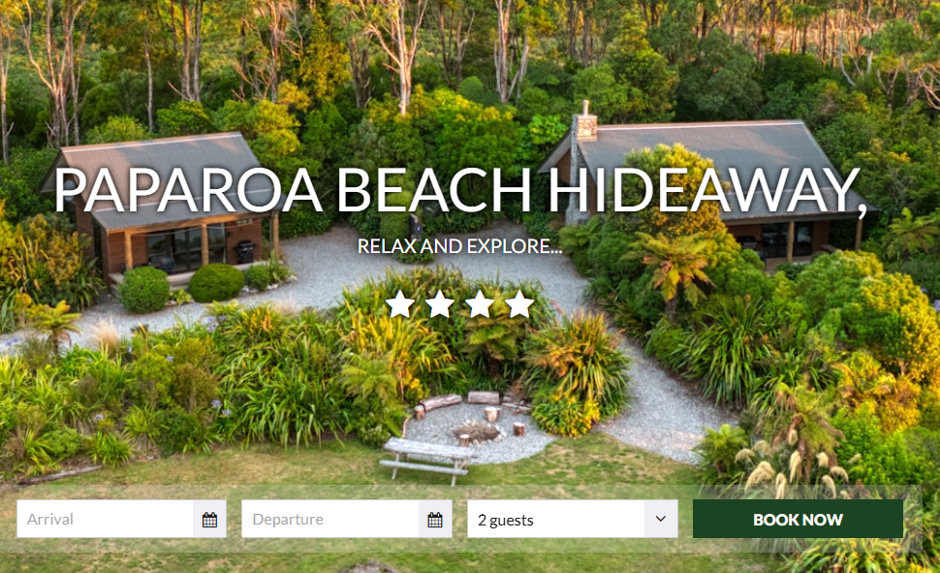
Examples of previous New Zealand domains now redirected
 |
 |
 |
 |
 |
 |
Why repurposing old domains matters
From a cybersecurity perspective, the reuse of an established domain can have advantages over registering a completely new domain.
An older domain may already have:
- Existing search-engine reputation
- Historical backlinks
- Cached content
- Existing references across the internet
- Email reputation
- Browser and security-system history
- Trust associated with its previous purpose
A domain that once represented a legitimate New Zealand organisation can therefore potentially inherit some of the digital reputation built up by its previous owner.
If that domain is subsequently redirected to a completely unrelated commercial operation, users may initially assume there is some connection between the old and new websites.
That is particularly relevant where the new destination involves financial transactions or gambling.
Where does Hollycorn N.V. fit in?
One of the organisations that warrants attention when looking at this ecosystem is Hollycorn N.V., a Curaçao-based gambling operator associated with numerous online casino brands. Their online casinos appear to be the final destination of the redirects.
Hollycorn has attracted regulatory attention from the Australian Communications and Media Authority (ACMA).
In February 2025, ACMA formally warned Hollycorn N.V. in relation to Crown Slots, stating that the service had provided prohibited interactive gambling services to Australian customers in contravention of Australia’s Interactive Gambling Act 2001.
ACMA subsequently issued further formal warnings involving Hollycorn-operated services during 2025, including Billy Billion, Crown Slots, Crown Slots1, Neospin, Slot Mafia and Slot Lounge.
And the regulatory activity did not end in 2025. ACMA issued another formal warning to Hollycorn N.V. in January 2026 concerning Rocketspin, followed by another in March 2026 concerning Retrobet.
These warnings relate to Australian gambling regulation and should not be interpreted as evidence that Hollycorn has conducted cybercrime or that any of the New Zealand domains discussed in this article are malicious.
They do, however, provide relevant background when assessing the wider ecosystem.
What should the Domain Name Commission do?
It would be premature to suggest that the Domain Name Commission should simply ban an individual from registering .nz domains based solely on the observations described here.
The Domain Name Commission has a defined regulatory role over the .nz namespace and is responsible for enforcing the .nz Rules and overseeing registrars, resellers and domain-name holders.
Importantly, the current .nz Rules require domain holders to ensure that their domains are not used for an unlawful purpose.
The Commission has also recently moved towards a more proactive, risk-based approach to monitoring and compliance. Its 2026 monitoring plan specifically discusses suspicious registrations, registrar processes and the security and integrity of the .nz namespace.
The Commission’s own material also acknowledges that domain-name abuse is an evolving issue and that it is developing a strategy addressing scams and fraud facilitated through DNS abuse.
That makes this type of registration pattern worth bringing to its attention.
A call for greater scrutiny, not a conclusion of wrongdoing
There is currently no evidence presented here that proves criminal activity by Arturs Batna, Topleed Limited or Hollycorn N.V.
Nor does the acquisition of an expired domain automatically indicate malicious intent.
The concern is the pattern.
Multiple previously used New Zealand domains appear to have been acquired within a short recent period, with the same individual appearing as the contact, followed by the domains being repurposed or redirected towards online gambling services.
That is unusual enough to warrant further scrutiny.
New Zealand has invested considerable effort in making the .nz namespace trusted. That trust has value. People visiting these sites will not currently be expecting to find online gambling sites.
If previously legitimate New Zealand domains can be systematically acquired and repurposed for unrelated commercial activities without meaningful scrutiny of the registration pattern, there is a risk that the historical reputation of the .nz namespace can be exploited.
For organisations responsible for cybersecurity, this is another reminder that domain reputation should not automatically be treated as evidence of legitimacy.
An old .nz domain may have a long and completely legitimate history.
That doesn’t necessarily mean the organisation operating it today is the same organisation that operated it yesterday.
Surely the NZ Domain name commission can do a better job of preventing these registrations.
Disclaimer
This article is based on publicly available information and observations of domain registration and website behaviour. The apparent associations described above are presented as matters for investigation and should not be interpreted as allegations of criminal conduct. Registration of an expired domain and subsequent use for online gambling is not, by itself, evidence of wrongdoing. Where regulatory action is discussed, the relevant regulator’s findings are identified separately. The author has not independently established any allegation of criminal activity involving the individuals or organisations mentioned.
About the Author