A New Zealand company providing clinical trial and laboratory services to the pharmaceutical industry has been listed as a victim on the leak site of the recently emerged ZaWoo threat group.
Zenith Technology, a New Zealand organisation operating at zenithtechnology.co.nz, has been listed on the 18th of August 2026 on the ZaWooBlog, a Tor-based data leak site associated with the emerging threat group.
At the time of writing, there has been no public acknowledgement from Zenith Technology confirming that it has suffered a cyber attack or data breach. The listing should therefore be treated as an allegation by the threat actor rather than confirmation that an intrusion or data theft has occurred.
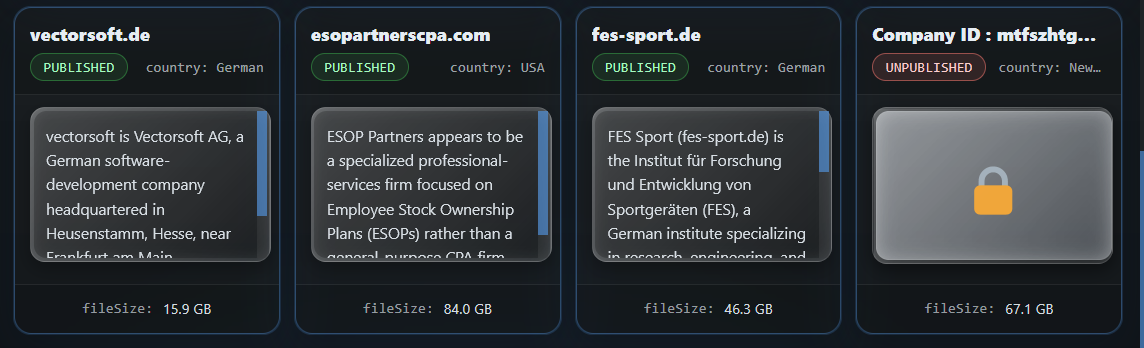
That said, evidence ZaWoo has published on their blog does indicate an internal server for Zenith Technology was compromised and 67GB of data exfiltrated. This data appears to include financial, corporate and PHI data. Their is no evidence to confirm that any data was encrypted alongside the exfiltration.
*** Update 1/09/26
The Zenith Technology entry on the ZaWoo ransom blog has now magically disappeared. Was a ransom paid and the data will now not be published? Did the Threat actor have a change of heart? (unlikely).
***Update 13/09/26
Interestingly, The Zenith Technology Entry on the ZaWoo ransom blog has now been locked. They are the only victim business on the blog in this state which may indicate the business is in negotiations with ZaWoo.
Who is Zenith Technology?
Zenith Technology provides clinical trial and analytical laboratory services for the international pharmaceutical industry.
This makes the organisation an interesting target from a cybersecurity perspective. Organisations operating in clinical research and laboratory environments can potentially hold commercially sensitive pharmaceutical information, research data, intellectual property and information relating to clinical trials.
However, the ZaWoo listing alone does not establish what information, if any, may have been compromised. Some of the other victims on the ZaWoo blog show screenshots of information taken but not Zenith Technology.
An emerging threat group
ZaWoo appears to be a relatively new entrant to the ransomware and data-extortion landscape.
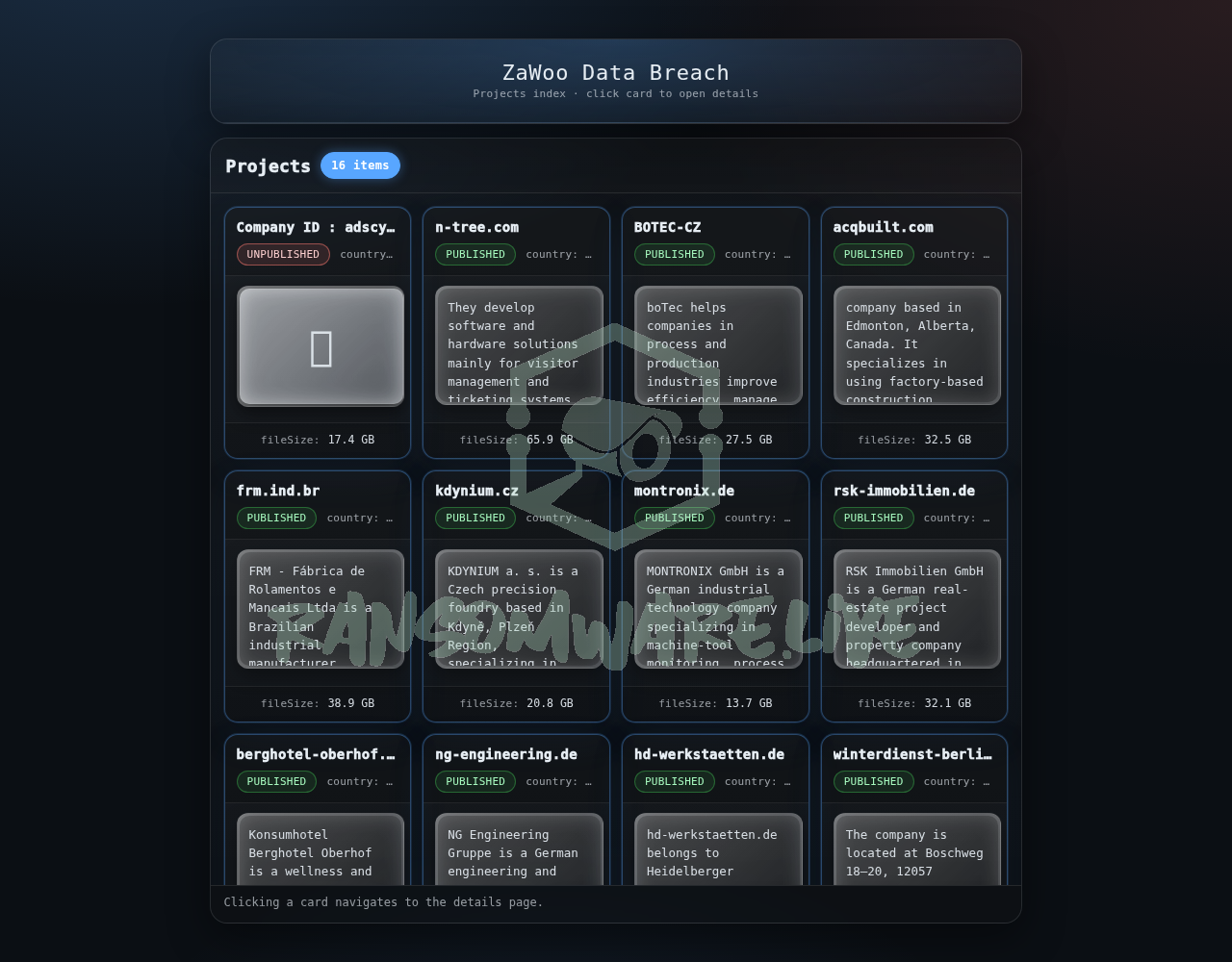
The group has only been observed publicly since approximately 18 August 2026 and has subsequently listed 16 alleged victims on its leak site.
One notable characteristic of the victim list is its apparent concentration of German organisations. Ten of the 16 listed victims are identified as being from Germany.
This concentration could potentially indicate targeting preferences, a relationship between the victims, or the compromise of a shared technology or SaaS platform used by multiple organisations.
At this stage, however, that remains speculation. And precursor glances at file listings on the onion blog site tend to suggest ZaWoo is compromising onpremise servers at these organisations.
There is currently insufficient public evidence to establish that the German victims were compromised through a common service or vulnerability.
ZaWoo utilises AI to analyse and provide reports regarding the data exfiltrated on their blog site.
Small organisations appear to be a focus
Another interesting characteristic of the ZaWoo victim list is the size and profile of the organisations being named.
Many appear to be relatively small organisations that would not normally attract significant attention in the wider cybersecurity community.
Alongside Zenith Technology, the list reportedly includes organisations such as a company involved in clearing snow from Berlin pavements and a sheltered workshop in Heidelberg employing people with disabilities.
There is no obvious common industry or business relationship between these organisations.
How credible is the ZaWoo activity?
There are some important caveats.
Threat actors can list organisations on leak sites without successfully compromising them. A listing does not necessarily mean that ransomware was deployed or that data was stolen.
ZaWoo has published screenshot material relating to some victims. However, the publicly available material does not currently appear extensive enough to independently establish the full nature of the alleged compromises.
There has been recent online analysis of ZAWOO ransomware prior to the publication of the victims on the blog. PCrisk.com has carried out a ransomware analysis here
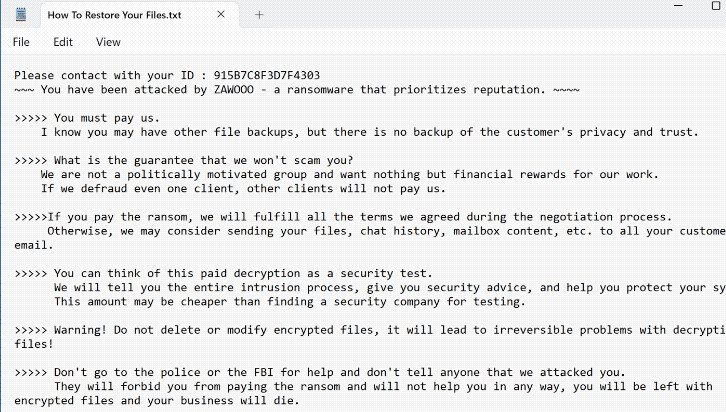
None of the 16 organisations currently listed are understood to have publicly acknowledged being breached.
This makes independent verification particularly difficult.
The most significant evidence would be the publication of genuine stolen data, verifiable samples, victim confirmation, or technical evidence linking the threat actor to an actual intrusion.
Until such evidence becomes available, the ZaWoo claims should be regarded as unverified allegations.
Who is behind ZaWoo?
There have been reports attempting to associate the “#Zawoo” alias with Zaw Oo, also known as “ZO”, a 37-year-old Myanmar citizen.
Any attribution of the ZaWoo operation to a specific individual should be treated cautiously.
Attribution in cybercrime investigations is notoriously difficult, and the use of an alias, infrastructure or online persona does not by itself establish that a particular individual is operating a ransomware group.
Further investigation and corroborating intelligence would be required before drawing firm conclusions about the identity or location of the individuals behind ZaWoo.
Why the Zenith Technology listing matters
The Zenith Technology listing is notable because of the organisation’s role within the pharmaceutical and clinical research ecosystem and the fact they are based in New Zealand. For example, what would have brought them to the attention of ZaWoo?
Even a relatively small laboratory or clinical research organisation can potentially provide an attacker with access to valuable information.
Potentially sensitive information could include:
- Clinical trial documentation
- Pharmaceutical research information
- Laboratory results
- Intellectual property
- Research data
Again as ZaWoo has not produced any evidence for this particular victim, means thatit is only speculative that any of these categories of information were accessed or stolen from Zenith Technology.
At present, there is insufficient public information to determine what, if anything, ZaWoo obtained.
An emerging threat worth watching
The ZaWoo operation is still in its early stages, making it difficult to determine whether the group will develop into a significant ransomware operation or disappear as quickly as it appeared.
The rapid appearance of 16 alleged victims in less than two weeks is nevertheless worth monitoring.
The apparent concentration of German victims is particularly interesting and warrants further investigation into whether there is a common technology provider, vulnerability, managed service or SaaS platform connecting some of the organisations.
The presence of a New Zealand organisation on the list also demonstrates why organisations should not assume that emerging ransomware groups are geographically restricted.
For now, the most appropriate assessment is “claimed breach — not independently verified.”
Organisations should avoid treating a threat actor’s leak-site listing as definitive evidence of compromise, while also recognising that such a listing warrants investigation.
Cybersecurity teams should monitor the ZaWoo operation closely as additional victims, evidence and technical indicators emerge.